Six jobs. One record for every piece.
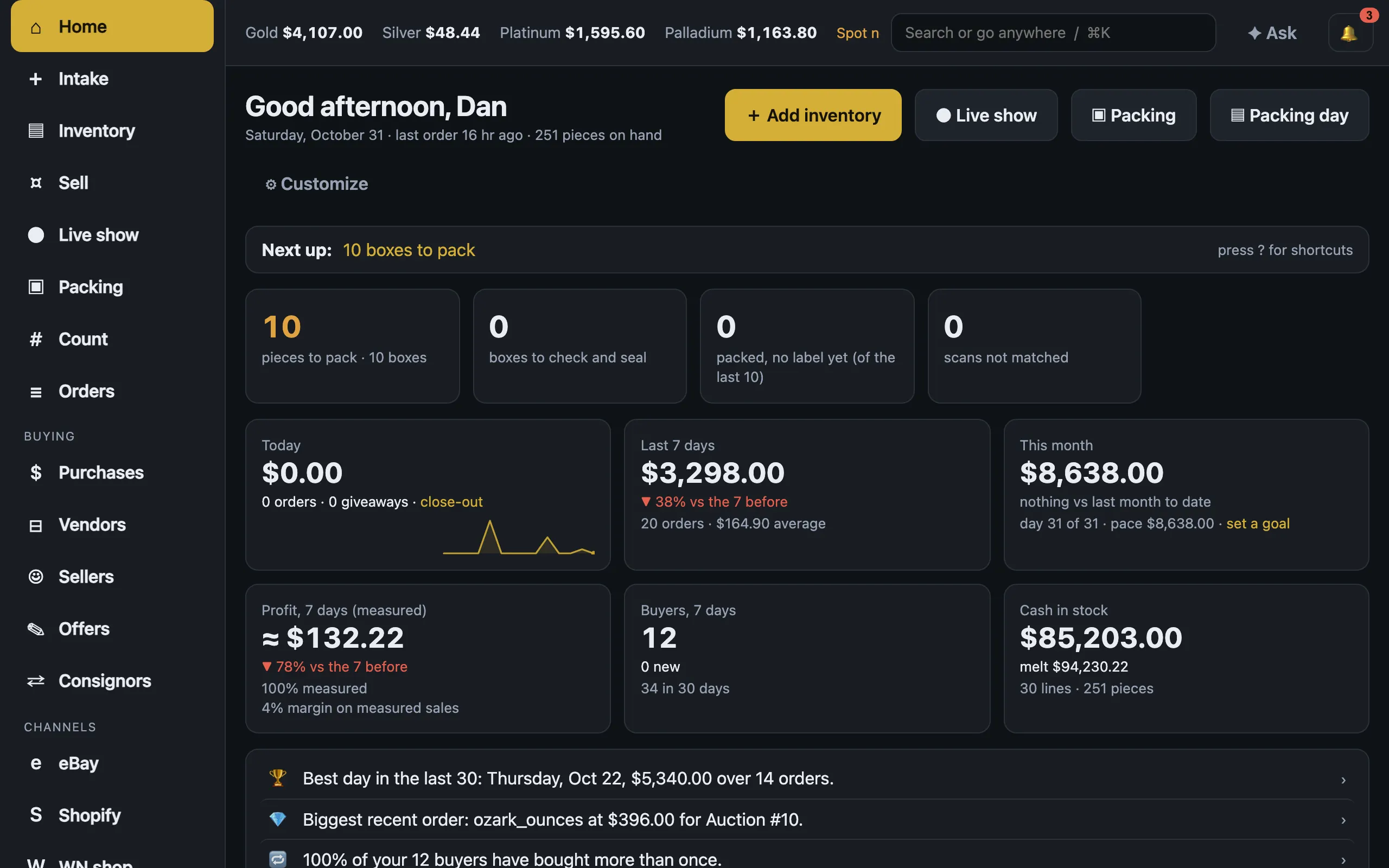
Real screens from a demo shop (fictional stock and buyers), on a phone at the safe and a laptop at the bench. Pick your kind of shop and the page reads in your order.
A night on it — the live seller
- 1
5:40 pm — the pull list from the last show is packed; the next show's lots are tagged and staged.
- 2
7:00 pm — the stream starts and the show connects itself; scan, sell, the sold tag prints, the goal bar fills.
- 3
9:30 pm — the orders are already matched; Packing shows ten boxes by buyer, each with its photo and seal in the morning.
A day on it — the counter
- 1
9:15 am — a walk-in with a tube of Eagles and a chain: the buy ticket prices at spot by your rules, the ID is noted, the 8300 clock knows the day's cash.
- 2
1:00 pm — a layaway payment, a consignment check-in, an offer on an estate priced in six minutes and sent as a link.
- 3
5:30 pm — the month-end report posts itself: cost basis, melt on hand, sales tax by jurisdiction.
A week on it — eBay and the web
- 1
Monday — twenty pieces come in; the titles build themselves, ✦ Write it drafts the descriptions, the listings go up with the eBay price beside spot.
- 2
Wednesday — three sell on eBay and one at the counter; the listings follow the stock without a hand on them; the drop-ship catalog fills two store orders.
- 3
Friday — the orders pack by box with a photo and a seal; the week's profit is on the books with the cost behind every sale.
A week in the shop
- 1
Stock comes in with a tag, a cost and a melt value; the show, the counter, eBay and the store sell from the same record.
- 2
Packing goes by box with a photo and a seal; the books post themselves with the cost behind every sale.
- 3
Pick your kind of shop above and the page reads in your order.
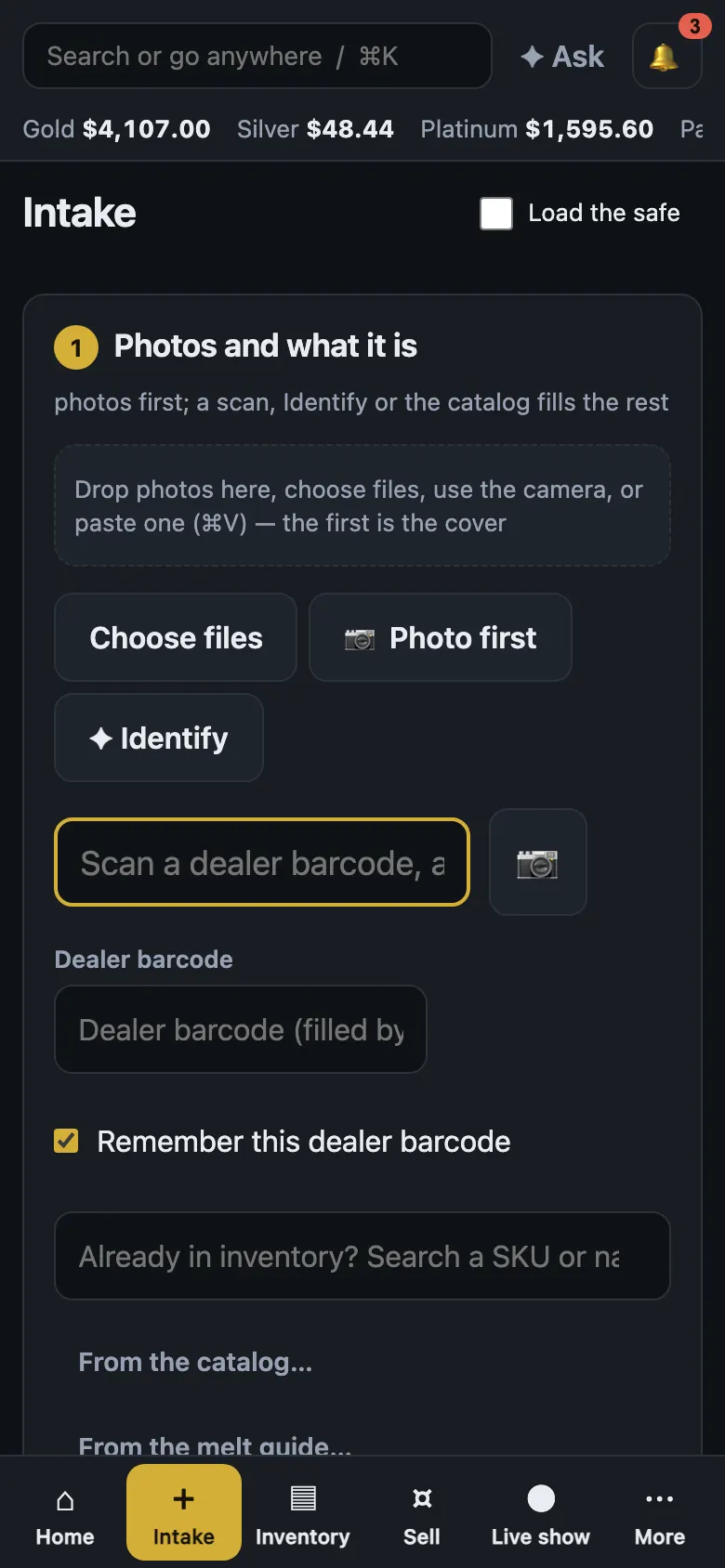
Photos first, the title builds itself in the order a buyer reads it, the tag prints.
Drop the pictures or use the phone's camera; ✦ Identify reads them and fills the form — metal, purity, weight, the year, the grade off a slab.
The name comes out in the order a buyer reads it (the weight first for bullion, the year first for a coin), and that same name is the eBay title and the store title.
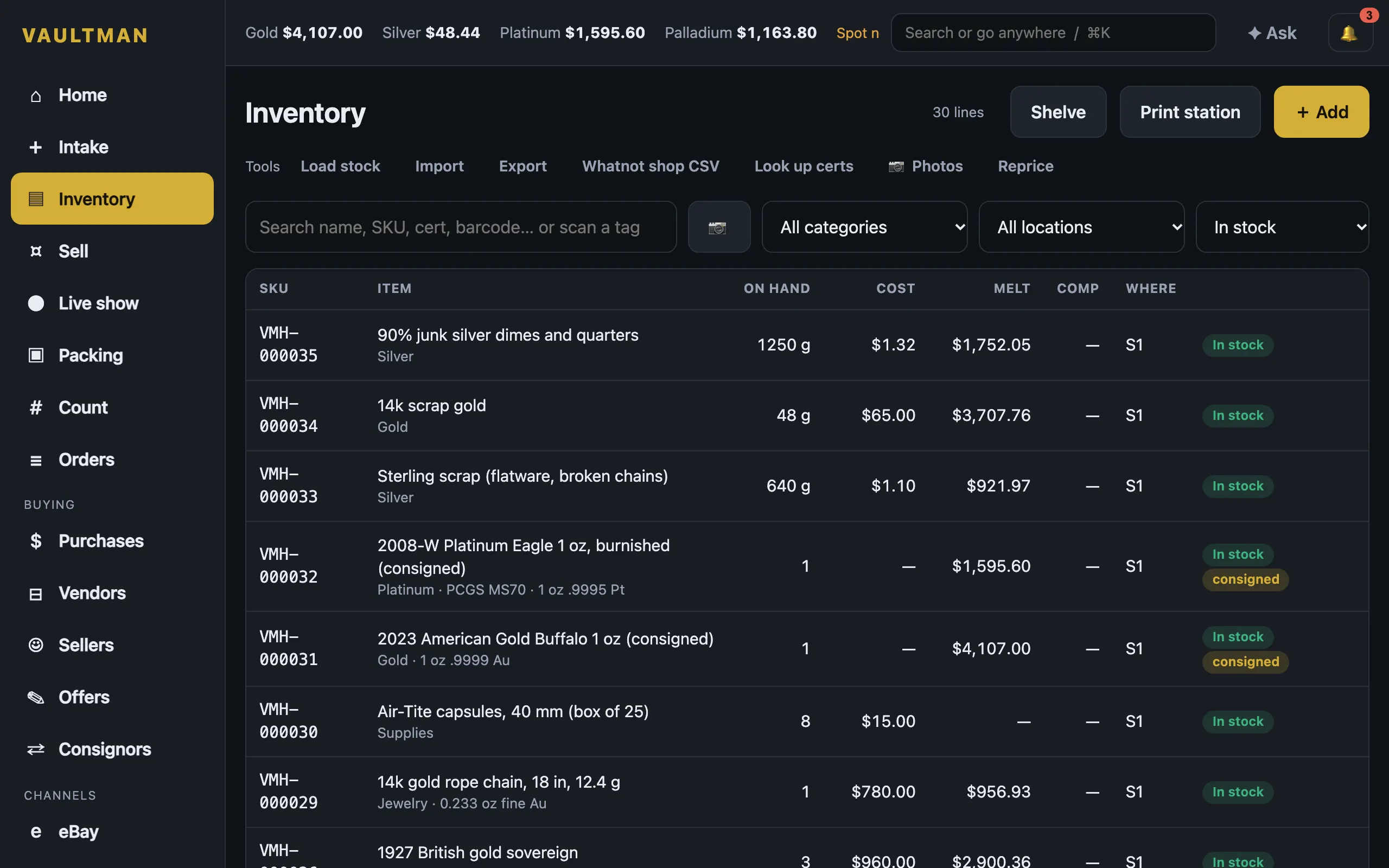
A spreadsheet of what you own loads in minutes: Inventory › Load stock works out the metal, purity and weight from the names and prints the tags; slab certs look themselves up.
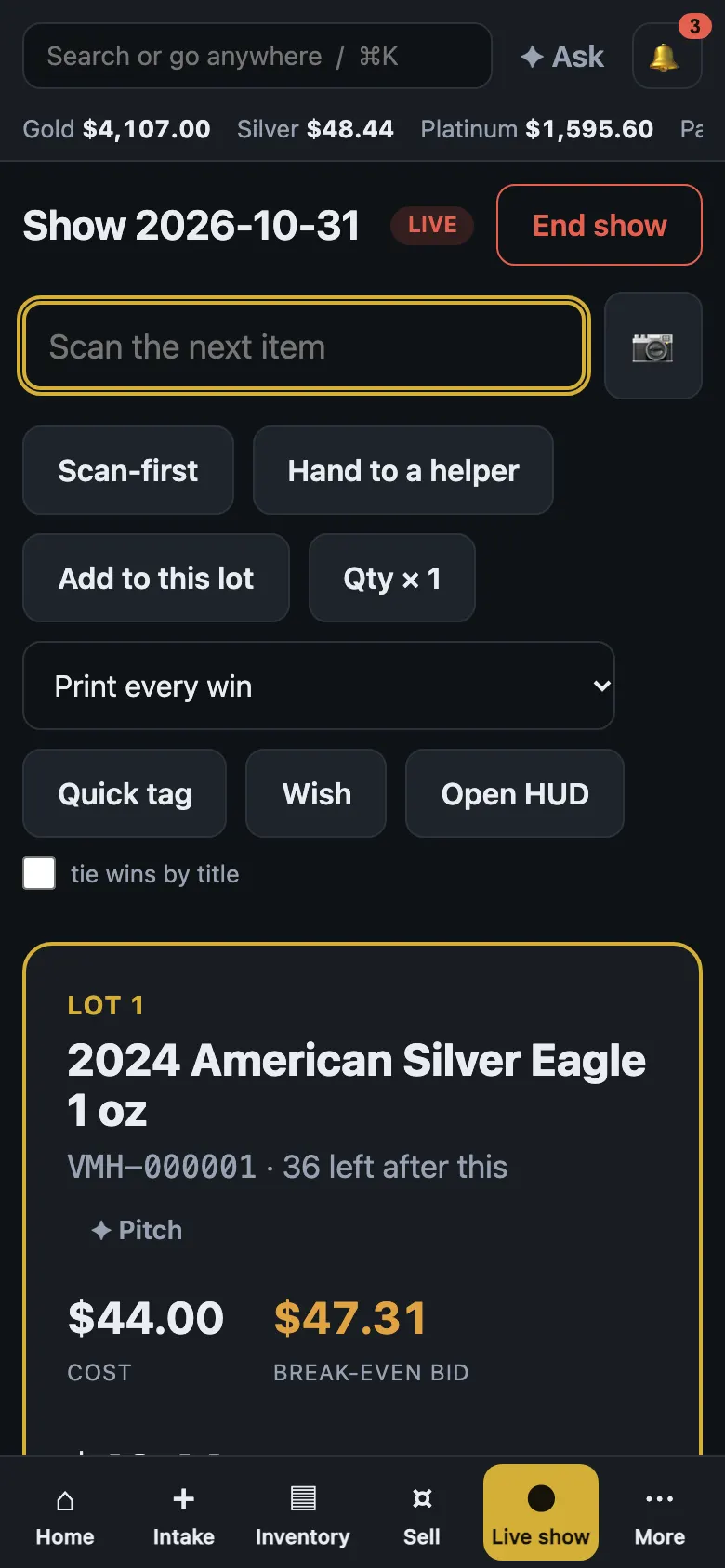
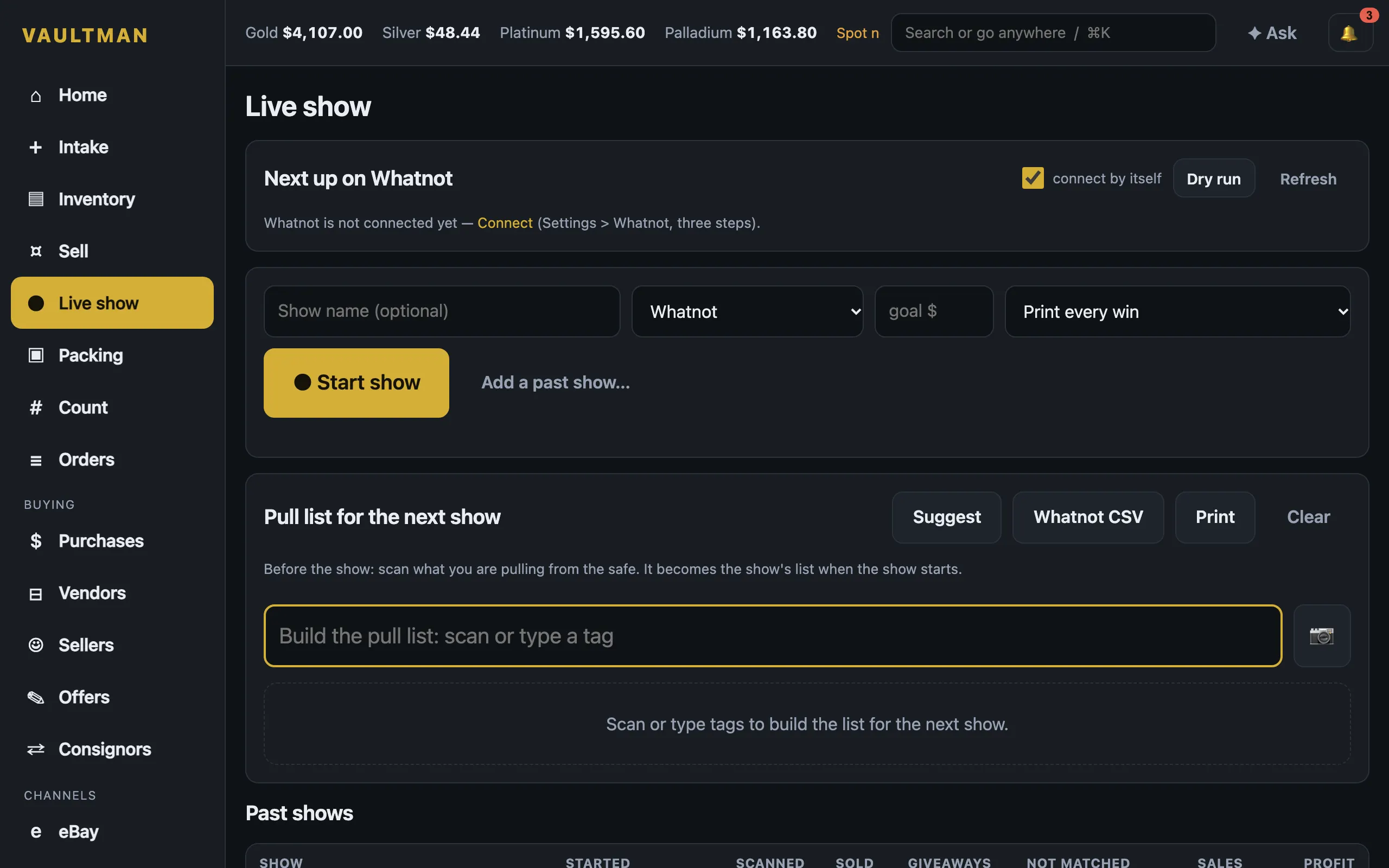
Scan on the block, sold tags as they sell, the goal bar, the overlay.
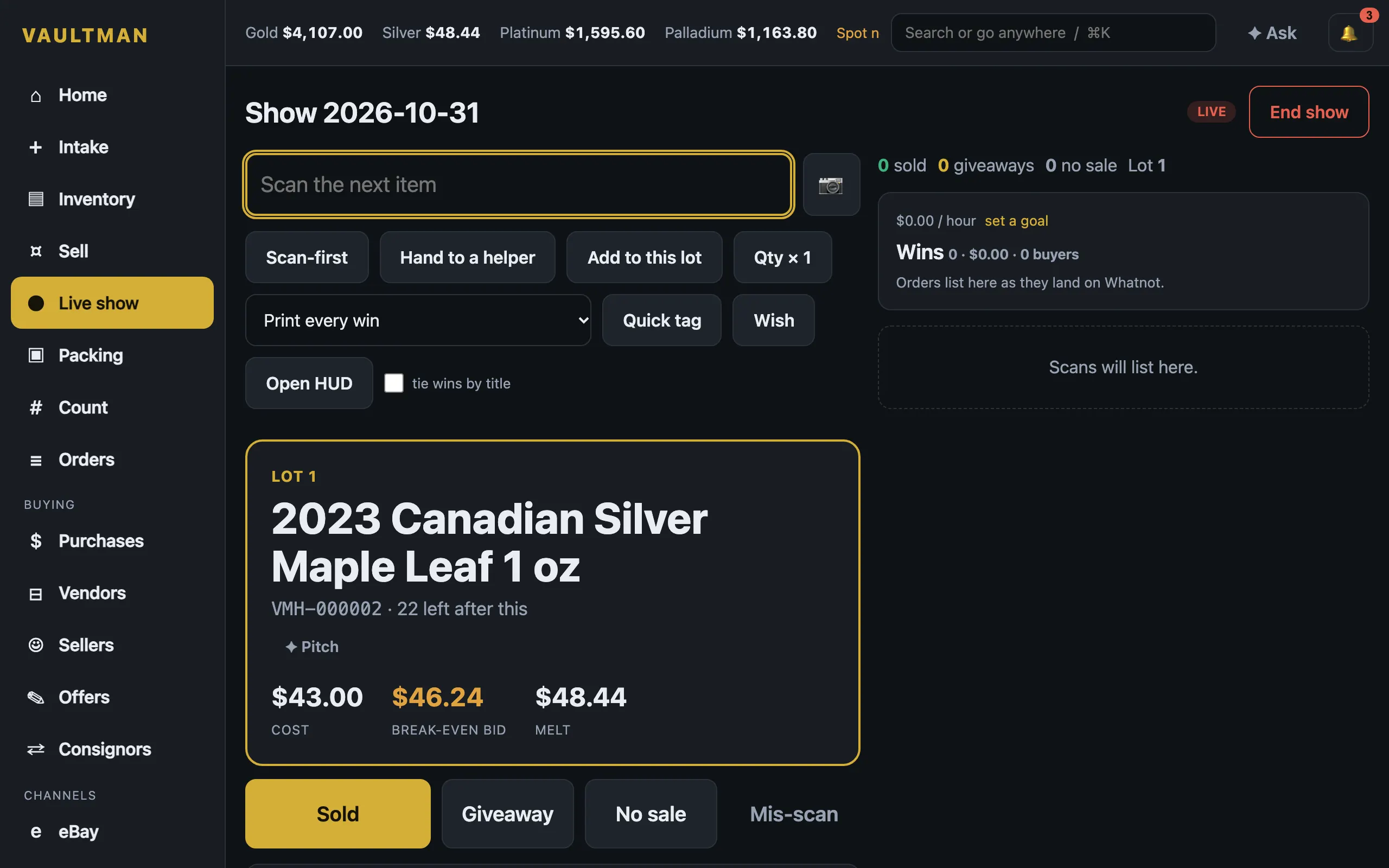
Scan the tag as the piece goes on the block: the lot shows the cost and the break-even bid, and ✦ Pitch writes the line to read.
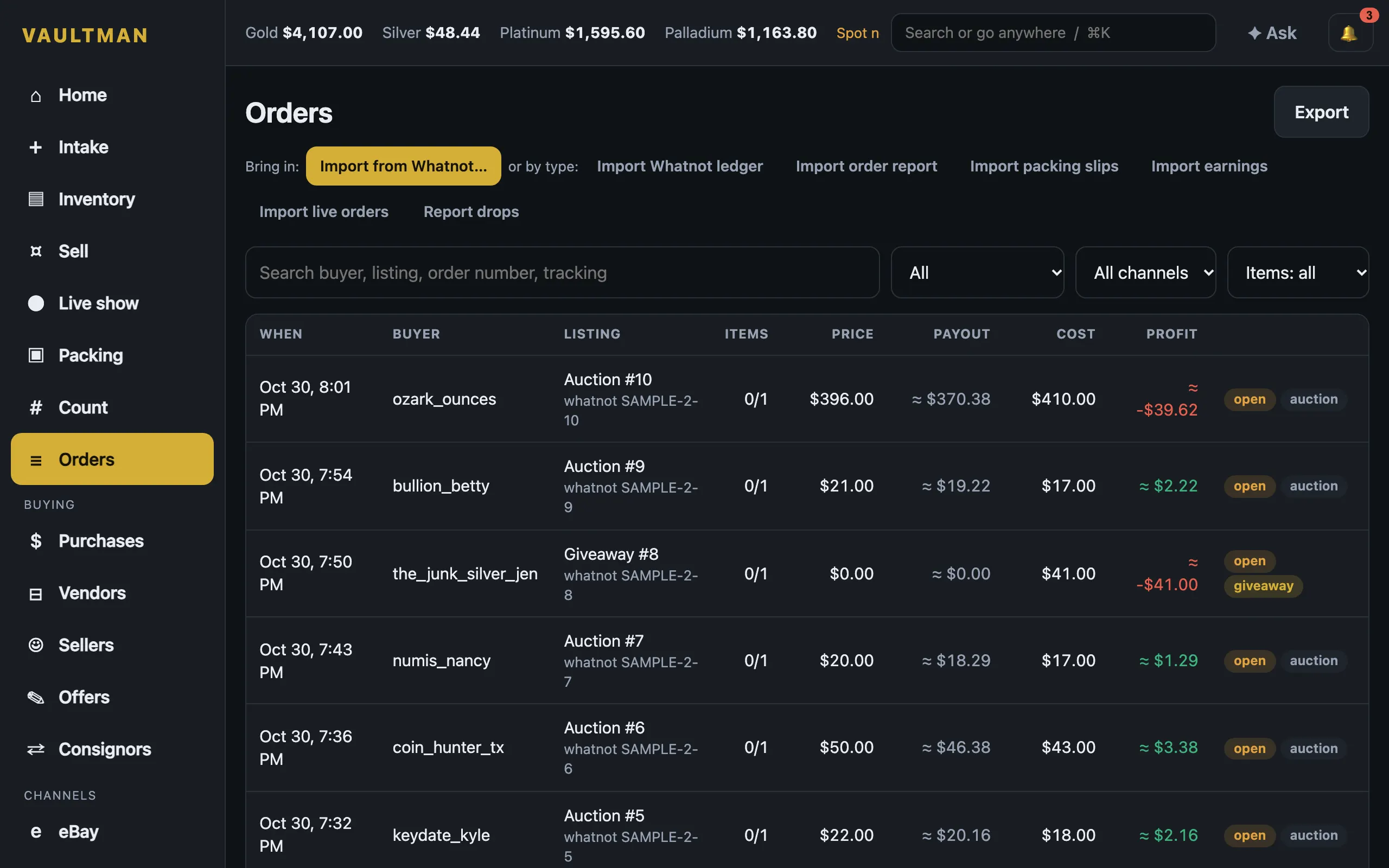
Sold, giveaway, no sale, mis-scan — one tap each; the sold tag prints as the hammer falls, with your logo, the same size your printer prints today.
The order list matches itself to Whatnot within seconds; the goal bar and the pace sit on the screen and the overlay on the stream.
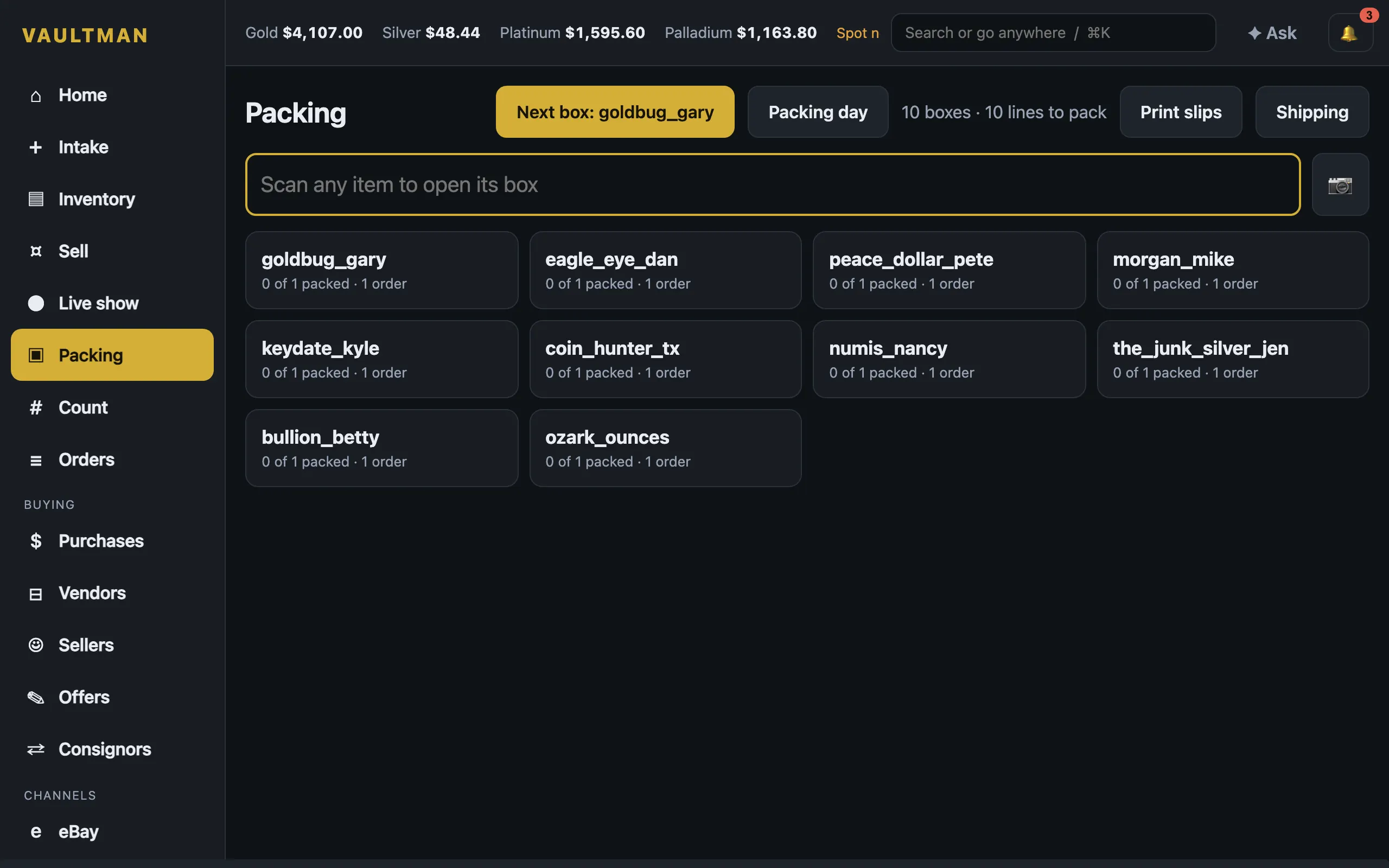
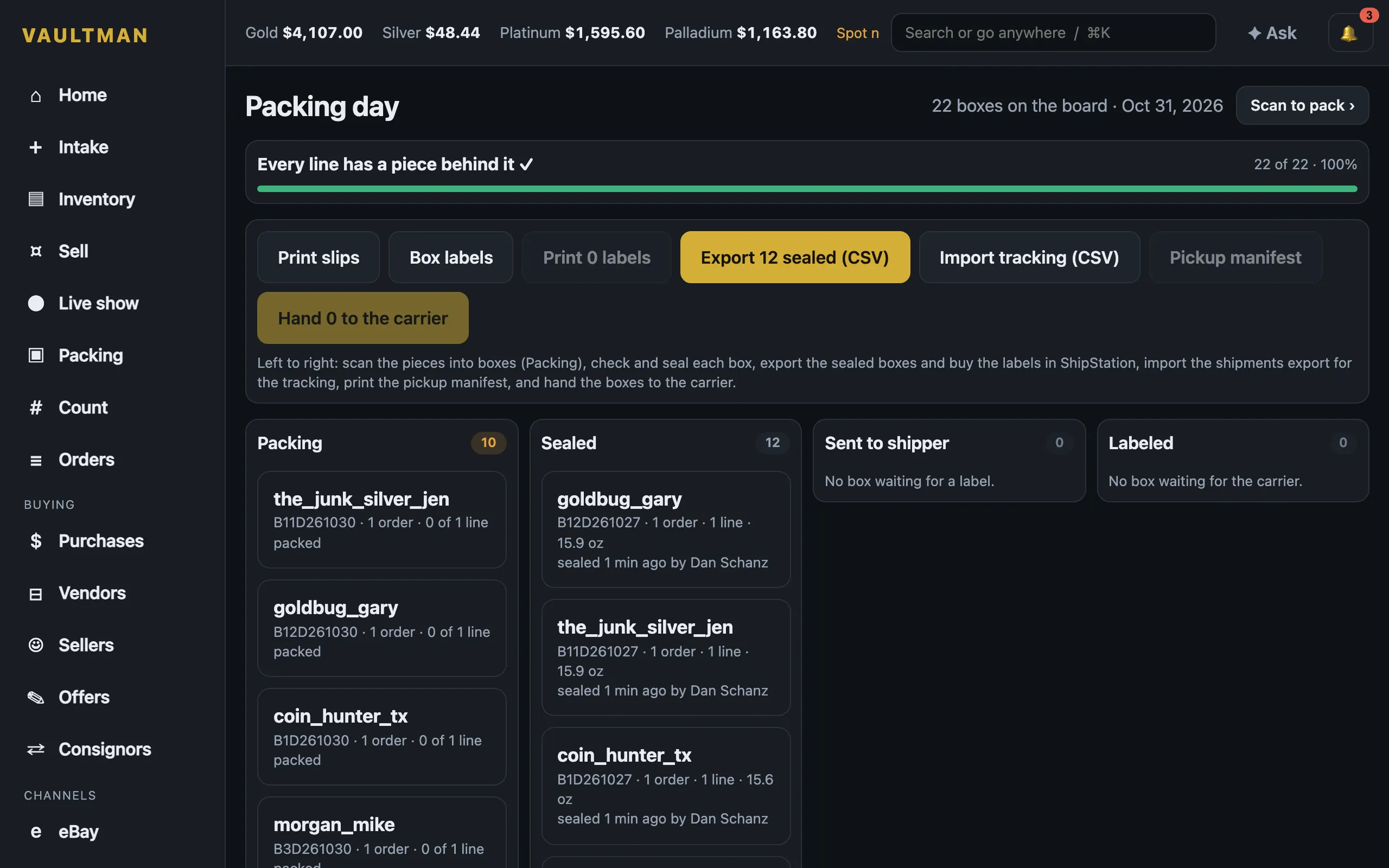
By box: a photo, a seal, the label — and the pull list for the next show.
Packing works by buyer, not by order: scan any piece and its box opens with everything that buyer won across the shows.
A photo of the packed box and a seal number go on the record; the label prints from the app; a shipper never sees what anything cost.
Packing day lays out every box left to pack; the pull list for the next show writes itself from what sold.
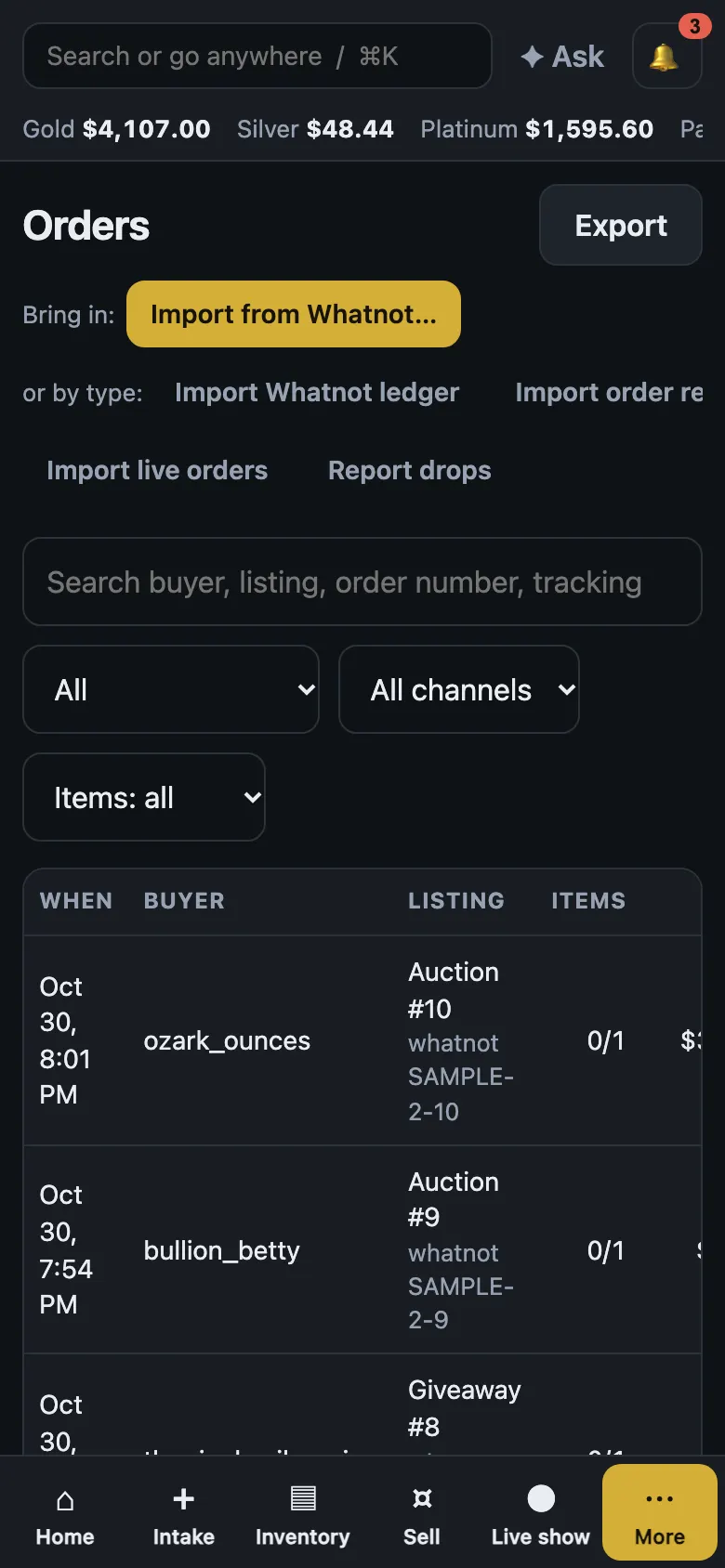
eBay listings that follow the stock, the store, offers, the counter.
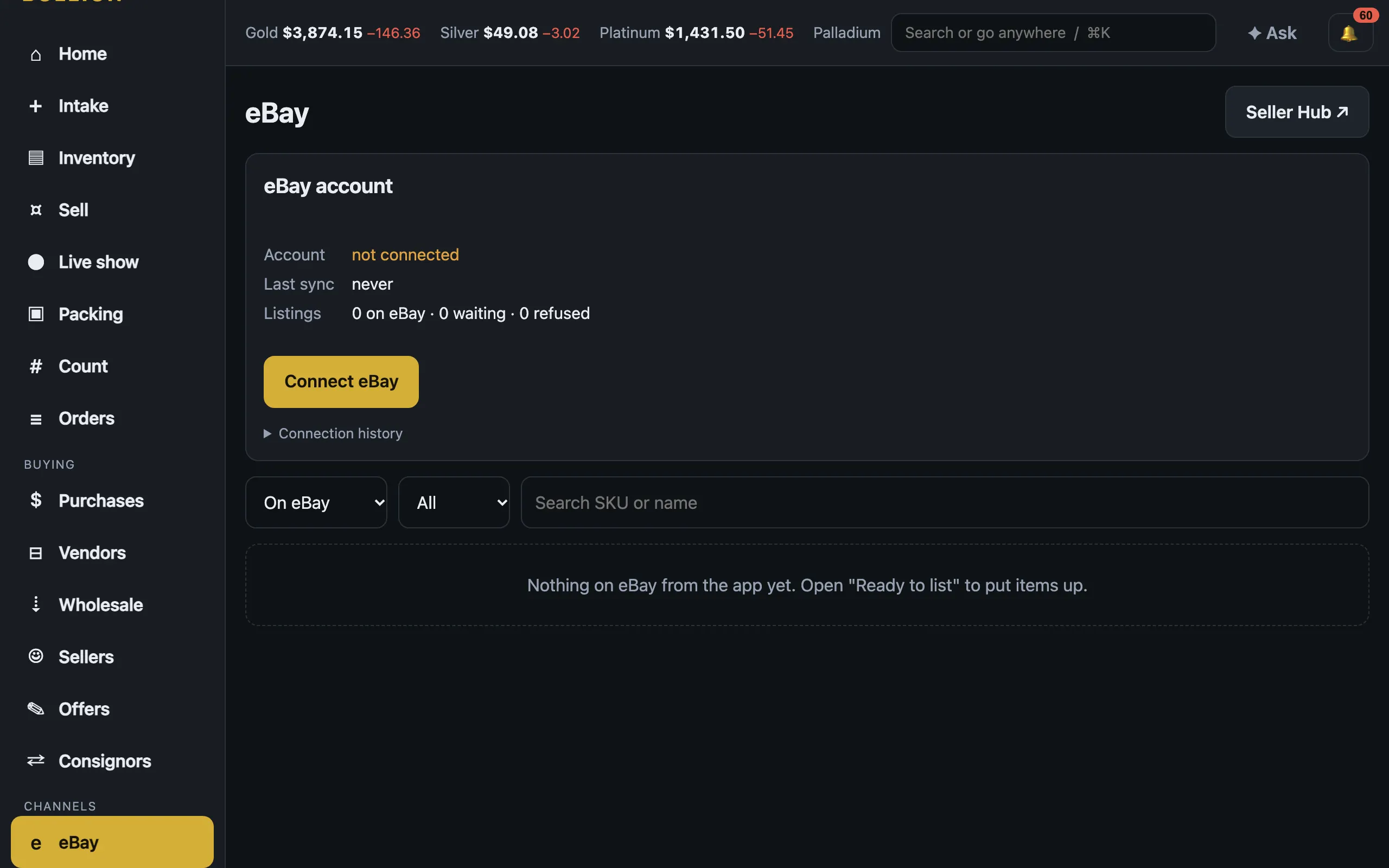
List on eBay from the piece: the title, the specifics the category asks for, the price with what you net after the fee, and a description a buyer reads to the end — ✦ Write it reads the photos too.
The listing follows the stock: sold at the counter or on a show, it comes down; repriced, it moves. Your own store follows the same record.
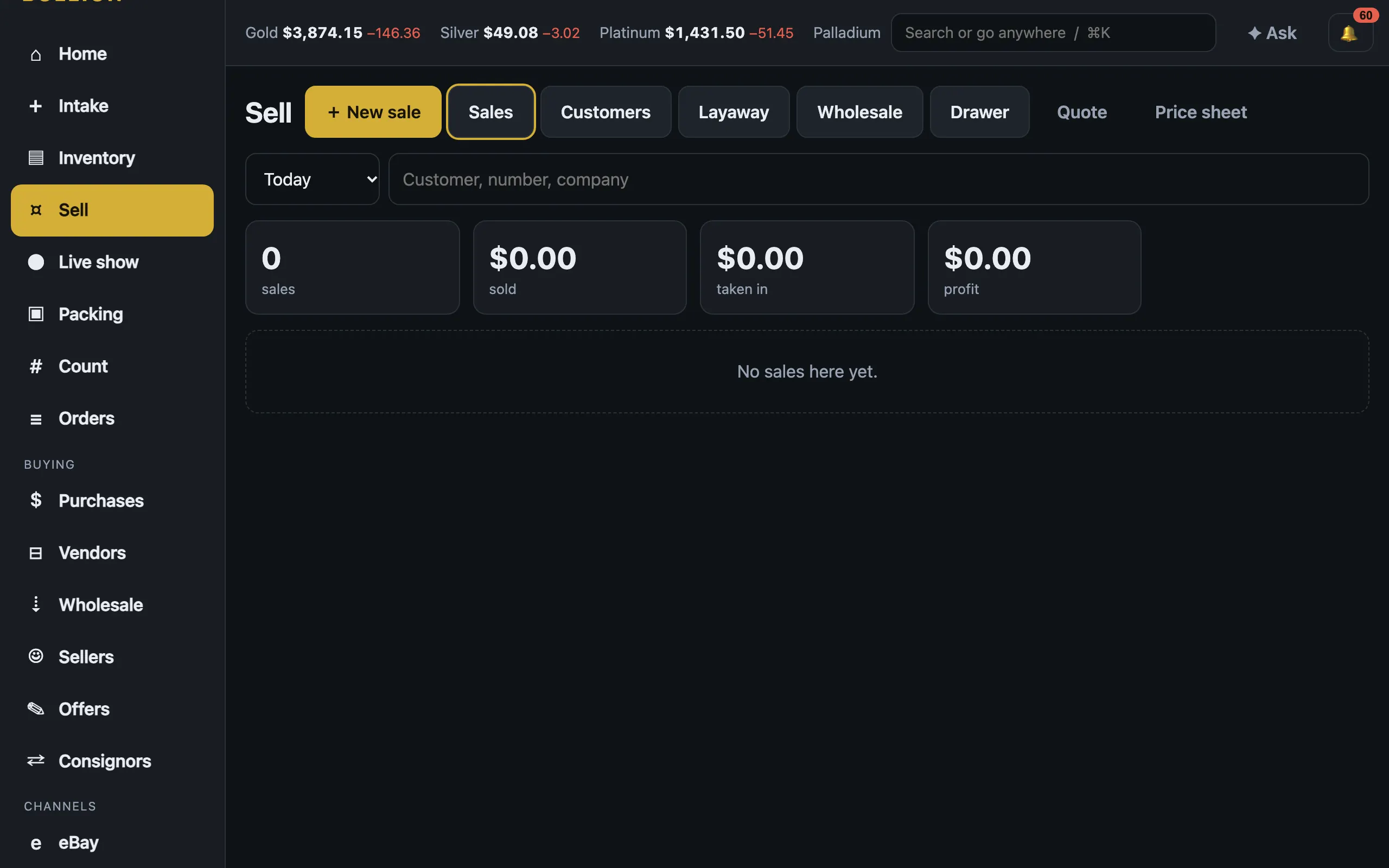
At the counter the buy ticket prices at spot by your rules, pays from the drawer and prints the receipt; layaway and consignment are two taps away.
Collections priced at spot, the invoice that reads itself, the drop-ship catalog.
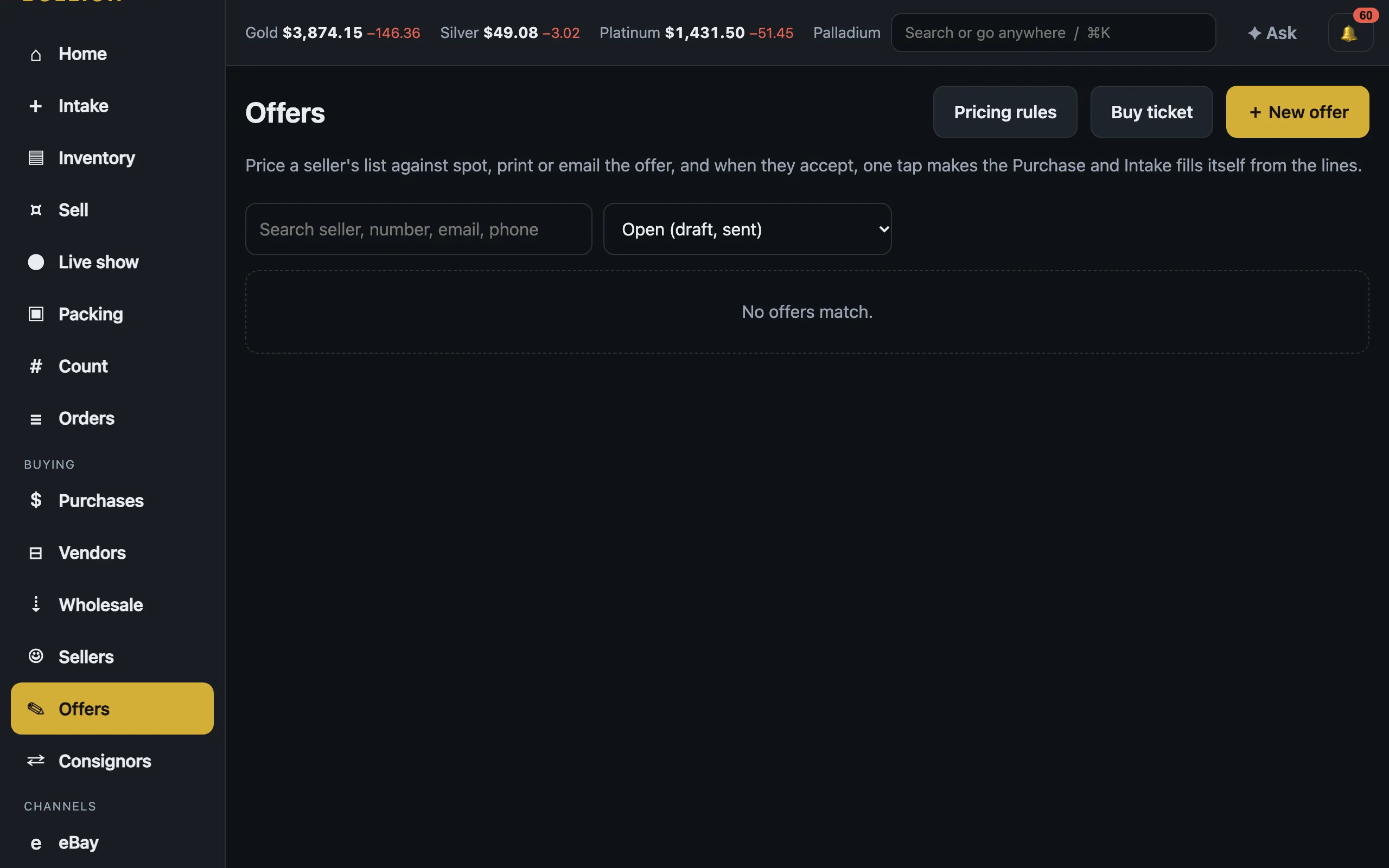
A collection offer prices itself at spot by your rules — a written offer in minutes, sent as a link the seller accepts in the app.
Vendor invoices read themselves: the lines land as purchases with the cost basis on every piece from day one.
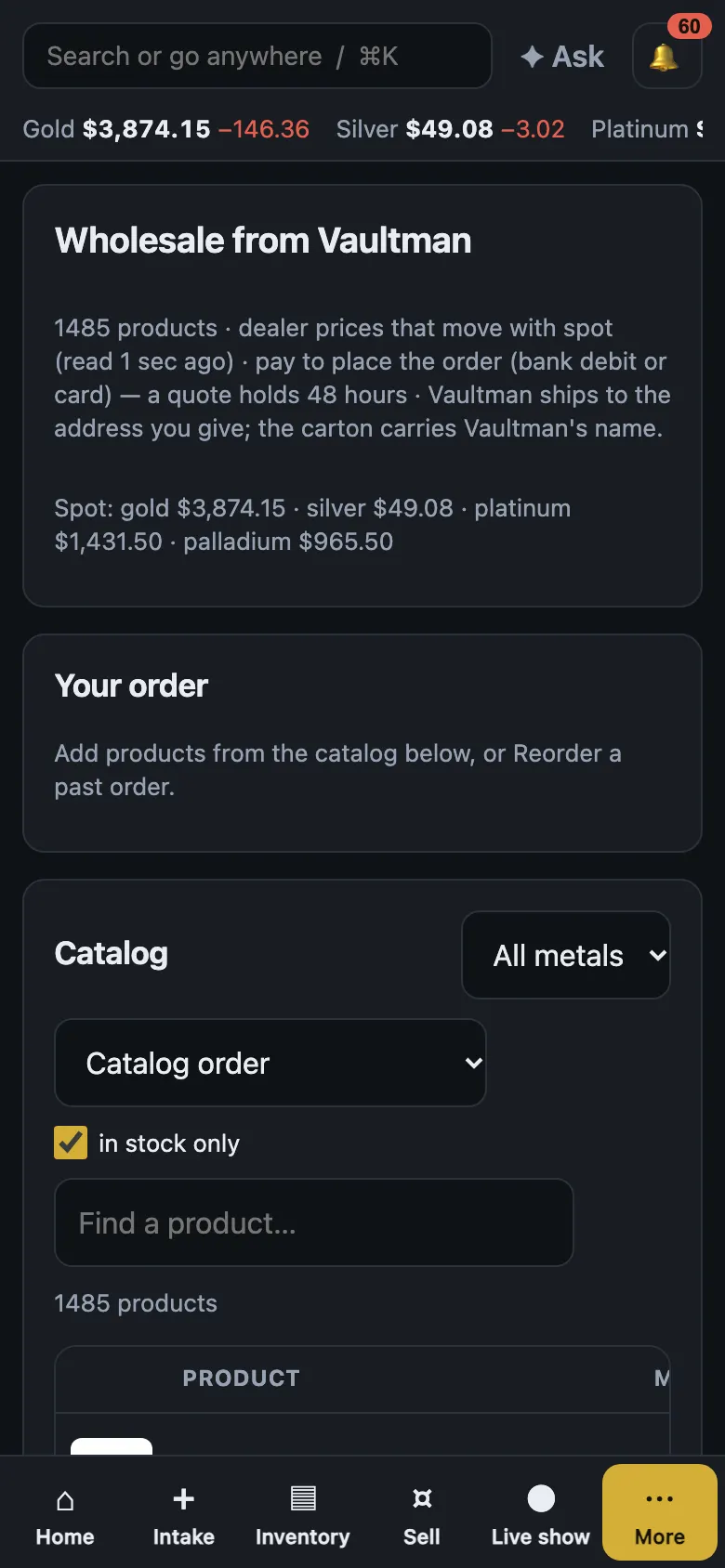
A 4,000-product drop-ship catalog through Vaultman, priced from the feed, with nothing to stock: your buyer orders, the goods ship.
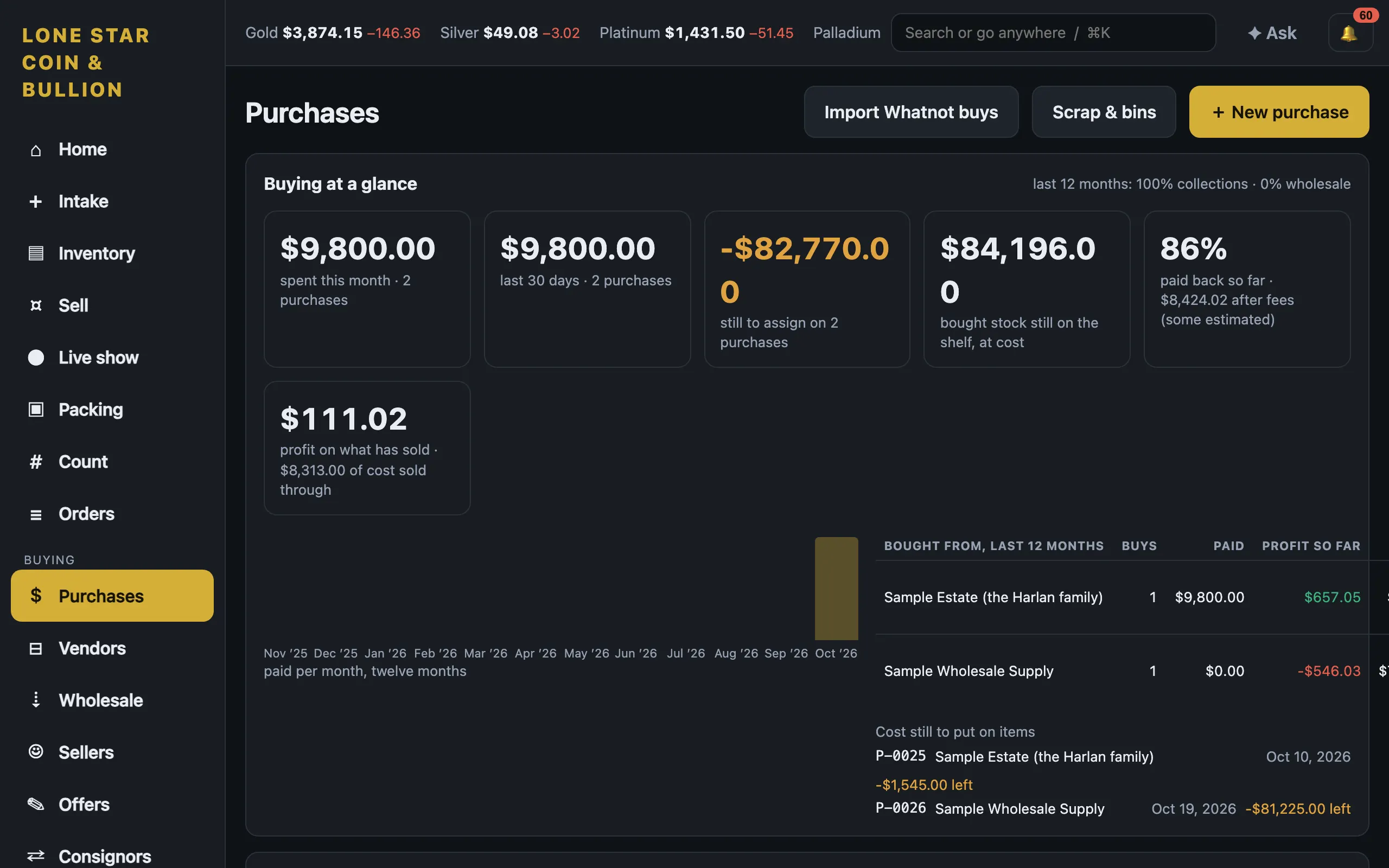
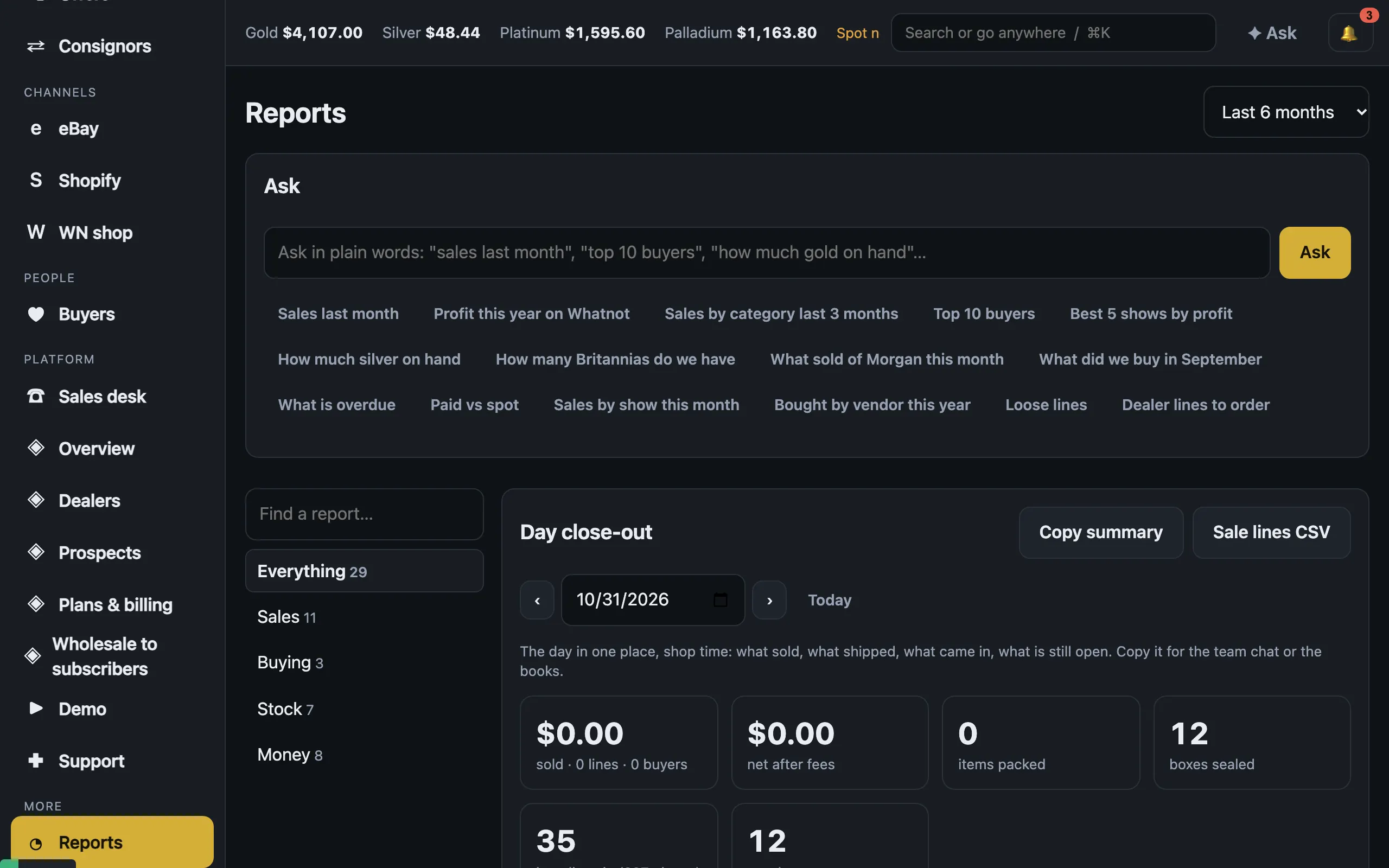
Cost basis per piece, melt live, sales tax by jurisdiction, a month-end an accountant can post.
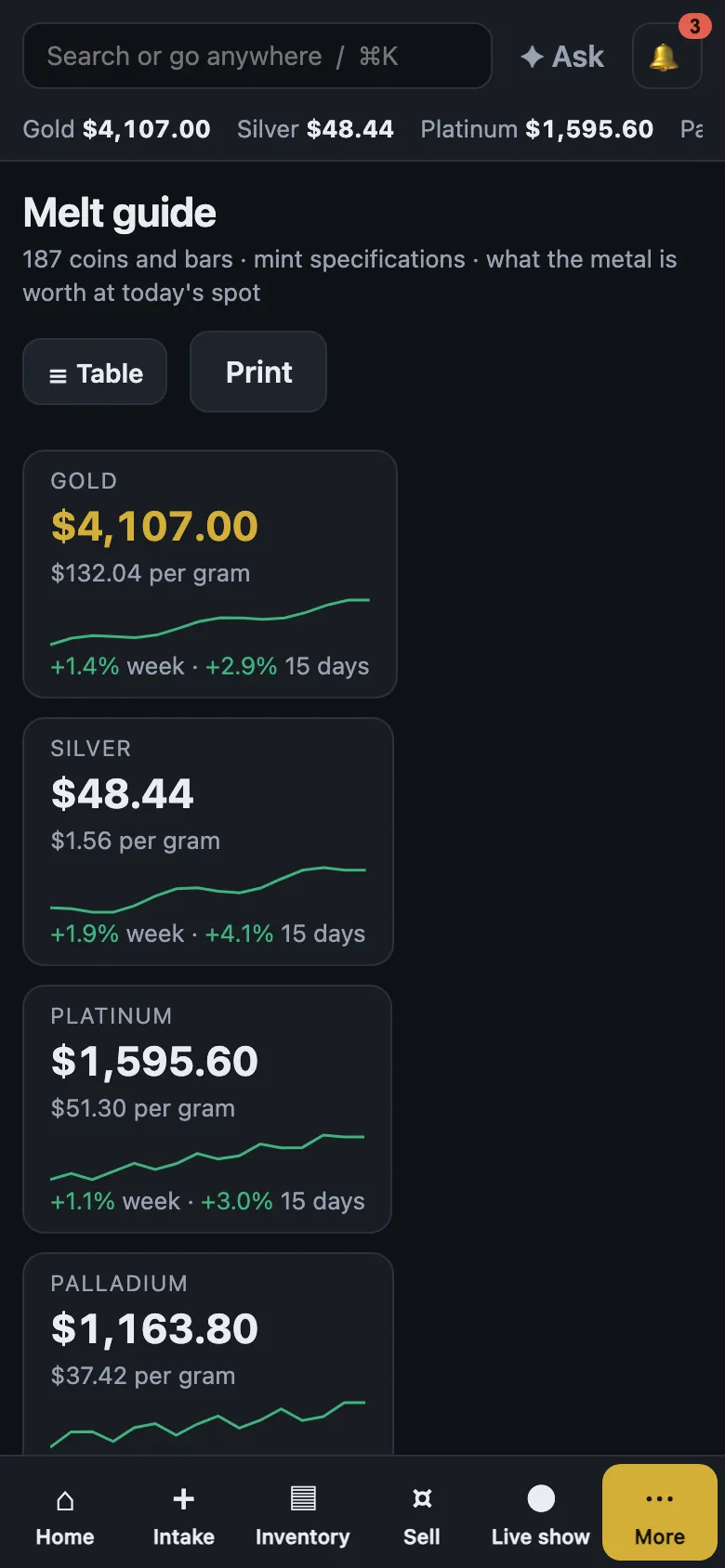
Every piece carries its cost and its melt value at today's spot, so profit is measured as it happens, not guessed at the end of the month.
Sales tax by jurisdiction, Form 8300 and 1099-B watched for you, payouts reconciled against the marketplace's statement.
Reports your accountant can post: sales, melt on hand, year-end, insurance; the accountant seat sees the books and nothing else.
See it on your own stock.
Twenty minutes with the person who will stand your copy up — or start the trial and load a spreadsheet tonight.